
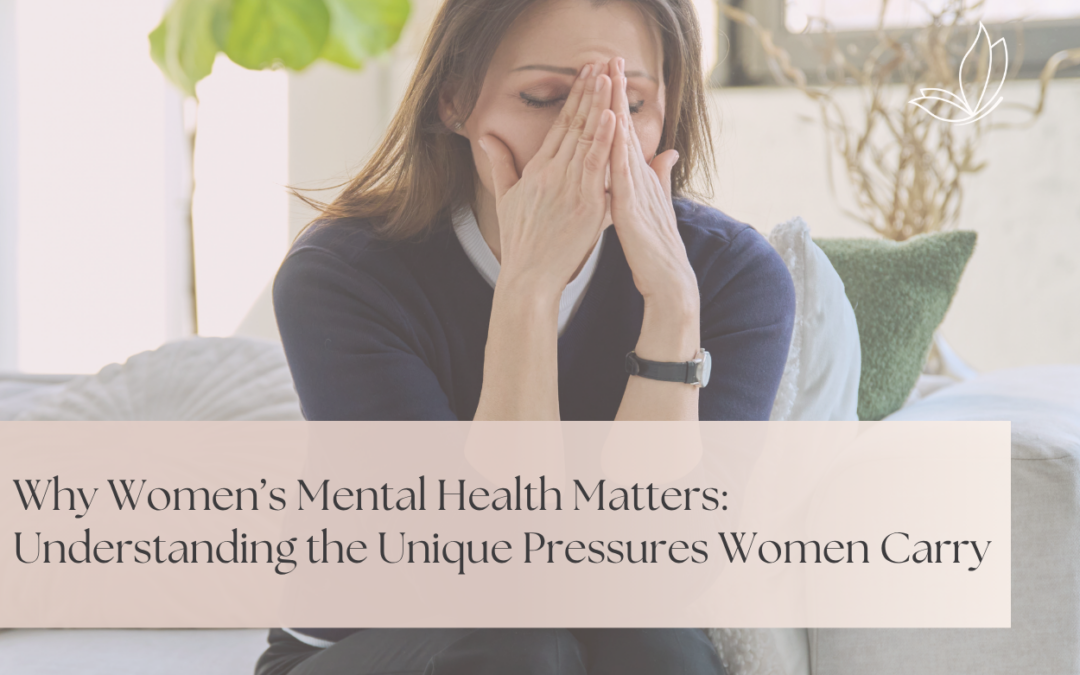
Why is therapy for women so important to consider? Women’s mental health is shaped by a complex mix of emotional, social, and biological factors. While everyone experiences stress, the pressures women carry are often layered, ongoing, and at times invisible.
These accumulated responsibilities can quietly impact well-being, making it essential to better understand and support women’s mental health.
From managing responsibilities at home and work to navigating relationships and expectations, many women are balancing more than what is immediately seen. Over time, this can lead to stress, burnout, and emotional exhaustion.
Why Women’s Mental Health Deserves Attention
Women’s mental health reflects not only individual experiences but also the broader roles women are often expected to hold. Many women find themselves balancing caregiving, professional responsibilities, and emotional support for others—all at once.
These overlapping demands can increase vulnerability to anxiety and depression in women, particularly when there is little time or space to rest, process emotions, or receive support.
Common Pressures Women Experience
The Mental Load
Many women carry the responsibility of managing daily life—keeping track of schedules, planning ahead, and ensuring everything runs smoothly. This constant mental effort can become overwhelming over time.
Caregiving Roles
Women are often primary caregivers for children, partners, or aging family members. While meaningful, these roles can also lead to emotional strain when support is limited.
Workplace Expectations
Balancing career growth with personal responsibilities can create ongoing pressure. Many women feel they must perform at a high level professionally while also managing responsibilities at home.
Societal Expectations
Unrealistic standards around appearance, success, and emotional availability can contribute to chronic stress and self-criticism.
Emotional Burnout in Women
When stress becomes constant, it can lead to emotional burnout—a state of mental and emotional exhaustion.
Signs of burnout may include:
- Persistent fatigue
- Feeling overwhelmed or irritable
- Emotional numbness
- Difficulty concentrating
- Increased anxiety or low mood
Burnout often develops gradually, especially when support is lacking and responsibilities continue to build.
Anxiety and Depression in Women
Rates of anxiety and depression in women are consistently higher and can be influenced by:
- Chronic stress
- Life transitions (such as postpartum or caregiving changes)
- Emotional overload
- Limited time for self-care
Recognizing these patterns is an important step toward making changes and seeking support.
How to Support Women’s Mental Health
Recognize What You’re Carrying
Understanding your responsibilities and emotional load is the first step toward change.
Set Boundaries
Protecting your time and energy may involve saying no or asking for help.
Share Responsibilities
Open conversations about workload—at home or work—can create more balance.
Seek Professional Support
Therapy offers a space to process emotions, understand patterns, and develop healthier ways of coping.
Women’s Counselling in Edmonton & Sherwood Park
At Journey Psychology, we understand that women often carry responsibilities that go unseen. Our team provides a supportive, collaborative, and non-judgmental space where you can explore your experiences and begin to feel more grounded.
We work with women navigating:
- Anxiety and depression
- Emotional burnout
- Chronic stress and overwhelm
- Relationship and family challenges
- Life transitions, including postpartum changes
Our approach is tailored to you. We draw from evidence-based therapies such as Cognitive Behavioural Therapy (CBT), mindfulness-based approaches, and other integrative modalities to support meaningful, lasting change.
Therapy can help you:
- Gain clarity and insight
- Build practical coping strategies
- Set boundaries with confidence
- Reconnect with your needs and values
We offer women’s counselling in Edmonton and mental health services in Sherwood Park, with both in-person and virtual options available.
Women’s mental health matters—not only because of the challenges women face, but because support, balance, and well-being are possible.
You don’t have to continue carrying everything on your own. With the right support, it’s possible to feel more grounded, supported, and connected to yourself again.