
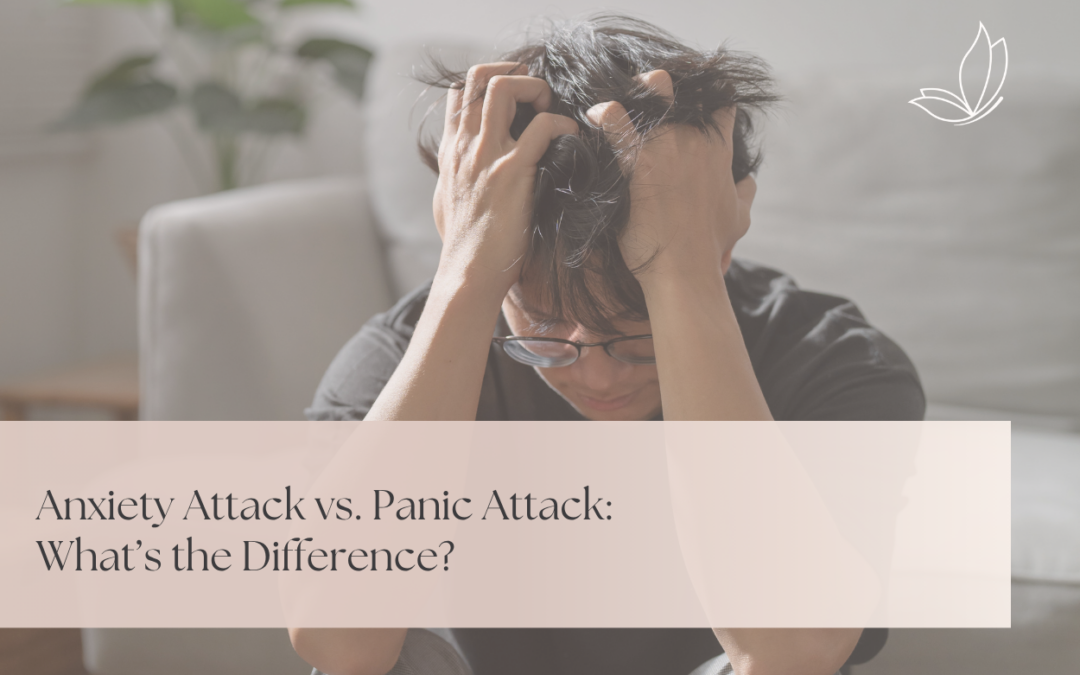
Anxiety attacks and panic attacks are often confused, but they are not the same. Understanding the difference between a panic attack and anxiety attack symptoms can help you make sense of what you’re experiencing and guide you toward the right support
At Journey Psychology in Sherwood Park, we often support clients who are trying to understand these experiences for the first time. Both are valid, both can feel overwhelming, and both are treatable.
What Is an Anxiety Attack?
An anxiety attack refers to a period of increased anxiety symptoms that typically build gradually over time. It is often linked to a specific stressor, such as work pressure, financial concerns, relationship difficulties, or health worries.
Unlike panic attacks, anxiety attacks tend to develop slowly. You may notice ongoing worry, racing thoughts, restlessness, and difficulty concentrating.
Common physical symptoms of anxiety include:
- Muscle tension
- Fatigue
- Trembling or shakiness
- Sleep difficulties
- Feeling on edge or restless
These symptoms are often connected to a situation or thought pattern and may reduce once the stressor is addressed or managed. Anxiety attacks are commonly associated with conditions such as generalized anxiety disorder.
What Is a Panic Attack?
A panic attack is a sudden and intense surge of fear or discomfort that peaks quickly, often within minutes. It can occur unexpectedly, even when there is no obvious trigger.
Panic attacks are a key feature of panic disorder, although they can also occur in other anxiety-related conditions.
Symptoms of a panic attack may include:
- Rapid or pounding heartbeat
- Shortness of breath anxiety or feeling unable to breathe
- Chest pain or tightness
- Dizziness or lightheadedness
- Sweating or chills
- Feeling detached or unreal
- Fear of losing control or dying
Because these sensations can feel severe, many people mistake panic attacks for medical emergencies, especially the first time they occur.
Key Differences Between Panic Attack and Anxiety Attack Symptoms
Although they can feel similar, there are a few important differences:
- Onset: Anxiety builds gradually, while panic attacks come on suddenly.
- Trigger: Anxiety is often connected to ongoing stressors, while panic attacks may appear without warning.
- Intensity: Panic attacks are typically more intense and physically overwhelming.
- Duration: Anxiety can last for extended periods, while panic attacks usually peak within minutes and then pass.
Understanding these differences can make the experience feel less confusing and help reduce some of the fear when symptoms arise.
Why It Matters
Recognizing whether you are experiencing anxiety or a panic attack can help you choose the right coping tools.
Ongoing anxiety may respond well to:
- Cognitive Behavioural Therapy (CBT)
- Stress management strategies
- Lifestyle adjustments
Panic attacks often respond well to:
- Grounding techniques
- Breathing exercises
- Learning to tolerate and ride out physical symptoms
When to Seek Support
If you experience frequent anxiety or panic attacks, or if symptoms begin interfering with daily life, seeking support can be helpful.
Professional therapy can help you:
- Understand triggers
- Reduce physical symptoms of anxiety
- Manage panic disorder symptoms
- Build coping tools for long-term regulation
At Journey Psychology, we provide anxiety help in Edmonton and Sherwood Park, supporting individuals in managing panic attacks, anxiety symptoms, and emotional overwhelm in a compassionate, structured way. With the right support and tools, it is possible to reduce symptom intensity and regain a sense of calm, confidence, and control.