
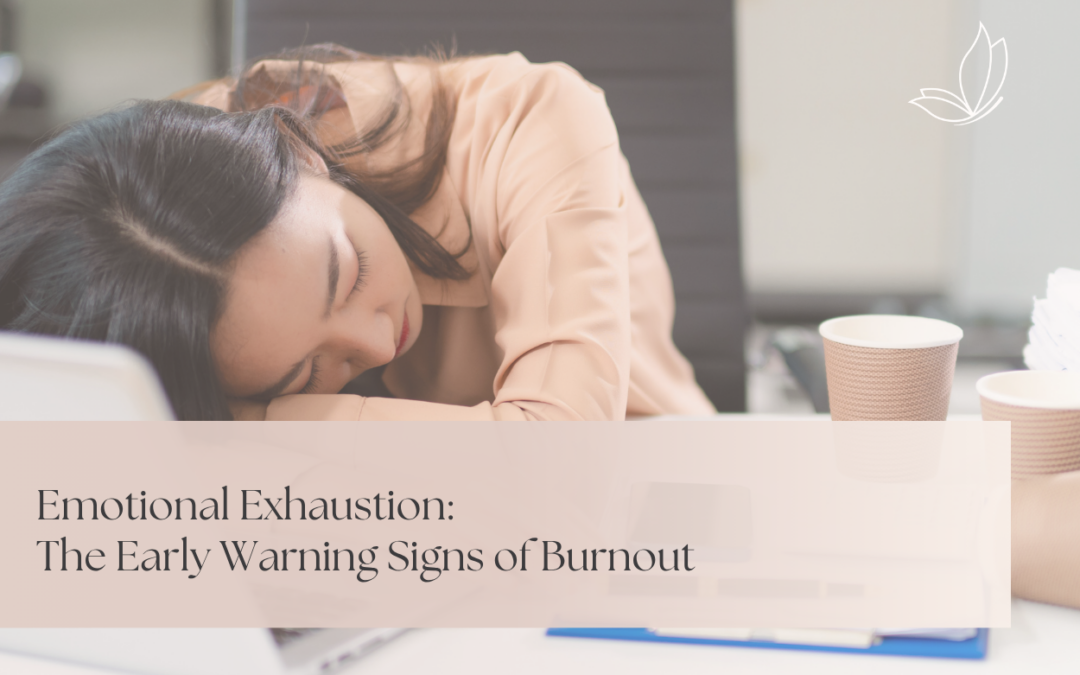
Burnout rarely happens overnight. More often, it builds up slowly through ongoing stress, emotional strain, and the lack of recovery time. Meaning, the body and mind can’t “catch a break”. One of the earliest stages is emotional exhaustion, and recognizing it early can make a significant difference in preventing more severe burnout.
Emotional exhaustion isn’t just the feeling of being tired. It’s a deeper sense of being drained mentally, emotionally, and even physically. Sometimes simple everyday demands start to feel overwhelming.
What Emotional Exhaustion Can Look Like
One of the most common signs is a persistent feeling of fatigue that doesn’t improve with rest. Even after a full night’s sleep or a weekend off, you may still feel depleted or unmotivated. You might also notice a growing sense of detachment. Things that once felt manageable or meaningful can start to feel distant or emotionally flat. Tasks can feel heavier, and it can become harder to care about outcomes the way you used to.
Another indicator is increased irritability or sensitivity. Small frustrations may feel bigger than they should,and your patience may run thinner than normal. This isn’t a personality change, it’s often a signal that your emotional reserves are running low.
Why Early Recognition Matters
Catching emotional exhaustion early is key. At this stage, recovery is often more manageable. Without attention, however, emotional exhaustion can deepen into full burnout, where motivation, energy, and well being are significantly impacted.
What Helps
While everyone’s situation is different, small steps can help reduce emotional exhaustion, such as prioritizing rest, listening to your body, setting gentle boundaries, and checking in with yourself before reaching burnout.
Support from a professional can also be important. At Journey Psychology, clients can access evidence-based therapy to better understand stress, recognize early signs of burnout, and build healthier coping strategies. Sessions can also focus on emotional regulation, boundary setting, and creating more balance in daily life.
Burnout doesnt happen suddenly, and with early support, it’s something that can be managed and recovered from.